A weekly review for your notes
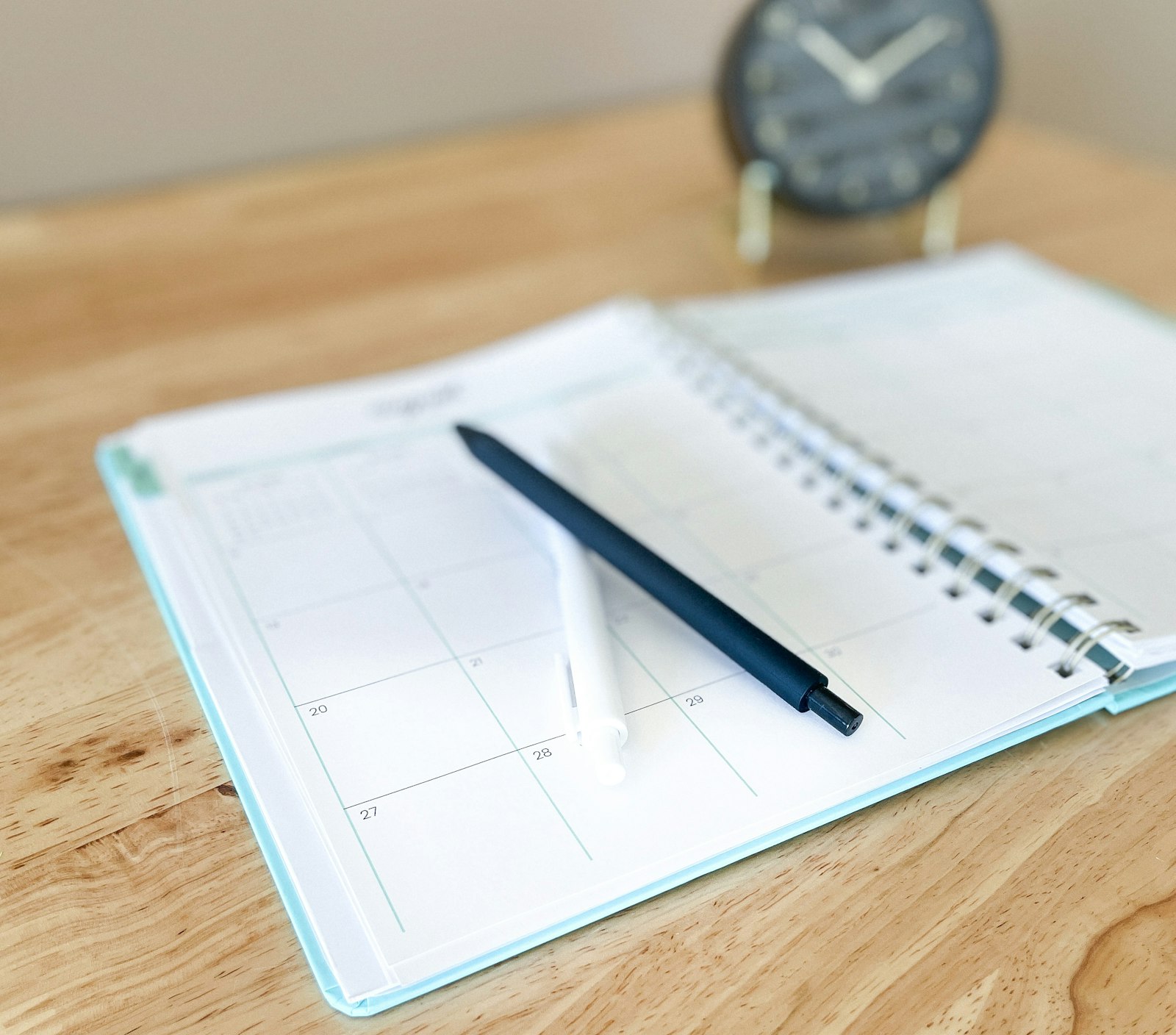
Most of what we write during a week is written in a hurry. A line between meetings, a half-finished draft, a link saved with a promise to come back to it. None of that is a problem. The problem is that, left alone, these scraps pile up until the notebook feels heavier than it should, and starting the next note becomes harder than it needs to be.
A weekly review is a small, regular pause to deal with that. Once a week, you look back over what you wrote, tidy what needs tidying, and choose what to write next. It takes about half an hour. It is not a reckoning or a performance review. It is closer to clearing a desk at the end of the week so that Monday starts on a clean surface.
Why a week is the right length
A day is too short to see patterns. You rarely know, on the evening you wrote it, whether a note was the start of something or a passing thought. A month is too long: by then the drafts have gone cold, and you no longer remember what the half-sentence at the bottom of a page was meant to become.
A week sits in between. The notes are still fresh enough that you remember why you wrote them, and there are enough of them to notice that you came back to the same question three times. That repetition is useful information. It is often the clearest sign of what your next proper note should be about.
If you already keep a short daily habit, such as the one described in a daily writing routine in 20 minutes, the weekly review is its natural partner. The daily session produces material. The weekly one decides what that material is for.
Set it up once
The review works best when it needs no decisions to begin. A little setup helps.
- Pick a fixed slot. Friday afternoon or Sunday evening suits many people, but any time you can protect most weeks will do. Put it in your calendar like any other appointment.
- Keep one inbox. Have a single place where quick notes, links and ideas land during the week: a page, a file or a section of your notebook. The review is much easier when there is one pile instead of five.
- Keep a short "next" list. This is a list of subjects you might write about, kept somewhere you will see it. The review adds to it and trims it.
- Set a time limit. Thirty minutes is enough. A review that runs to two hours will soon stop happening.
That is all the equipment there is. You do not need a special app or template, although you may want to keep the checklist below somewhere you can open each week.
Look back: read before you tidy
Start by reading, not by sorting. Go through the week's notes and drafts once, from oldest to newest, without changing anything. Ten minutes is usually enough.
As you read, keep three questions in mind:
- What did I write about more than once?
- What did I start and not finish?
- What surprised me, or changed my mind?
Jot short answers on a fresh page. These are not notes for anyone else. They are a list of observations, and they will guide the rest of the review.
It also helps to look at anything you published. Reread it as a reader would, with a little distance. You may spot a missing step, an unclear sentence or a title that does not quite say what the note is about. Note these down too; you will fix them in the next stage.
Tidy: small fixes, not rewrites
Tidying is where most of the time goes, and where it is easiest to get lost. The rule we keep is simple: in a weekly review, you make small fixes and decisions. Large rewrites go on the "next" list and get their own session.
For each item in the inbox, make one of four decisions:
- Keep: it is a useful fragment. Give it a clear title and move it where it belongs, for example into one of the sections of your notebook.
- Merge: it adds to a note you already have. Copy the useful line into that note and remove the duplicate.
- Promote: it deserves to become a proper note. Add it to the "next" list with a one-line description of what the note would say.
- Let go: it no longer matters. Delete it, or archive it if you prefer, and move on without guilt.
Most items take less than a minute. If one takes longer, that is a sign it belongs on the "next" list rather than in the review.
For published notes, fix the small problems you spotted while reading: a typo, a broken link, a clearer heading. If a change alters what the note says, add a short dated line at the end so readers know what changed. Our note on keeping a public notebook explains why that one sentence is worth the trouble.
If you keep your notebook on NoteNew, this is also a good moment to check that tags and sections still make sense. Tags connect your notes to topic pages, and sections keep a growing archive easy to browse. Both stay useful only if they are kept tidy. The features page describes how they work.
Choose what to write next
The last ten minutes are the most valuable part of the review. You look at your "next" list and pick one subject, occasionally two, for the coming week.
A few questions help with the choice:
- Which subject came up more than once this week?
- Which one could I write well with what I already know?
- Which one would a reader find useful on its own, without the rest of my notes?
- Which one am I still curious about?
When you have chosen, write a one-line brief for it: what the note is about and what a reader should take away. "How I sort the inbox in under ten minutes, with the four decisions" is a brief. "Inbox stuff" is not. A good brief turns the first writing session of the week from a search for a topic into a start on the work.
Then trim the list. Anything that has sat there for several weeks without being chosen can usually go. A short, current list is far more useful than a long one you no longer read.
The weekly review checklist
Here is the whole routine in one place. Copy it into your notebook and adjust it to your week.
- Open the inbox and the "next" list. Set a timer for thirty minutes.
- Read the week's notes once, oldest first, without editing.
- Write down what repeated, what is unfinished, and what surprised you.
- Reread anything you published and note small problems.
- Sort each inbox item: keep, merge, promote or let go.
- Fix small problems in published notes; add a dated line if the meaning changed.
- Check that titles, tags and sections still fit.
- Choose one subject from the "next" list and write a one-line brief.
- Trim the "next" list of anything stale.
- Close the notebook. The review is done.
The aim is not a perfect notebook. It is a notebook you are glad to open on Monday.
Some weeks the review will take fifteen minutes; some weeks you will skip it. Neither matters much. What matters is that you return to it often enough that the notebook stays light, and the next note is always waiting with a brief attached. If you have questions about tags, sections or feeds on NoteNew, the help page has short answers.


Comments 0
Replies to this note, oldest first.
No comments yet. If this note was useful, say so below.